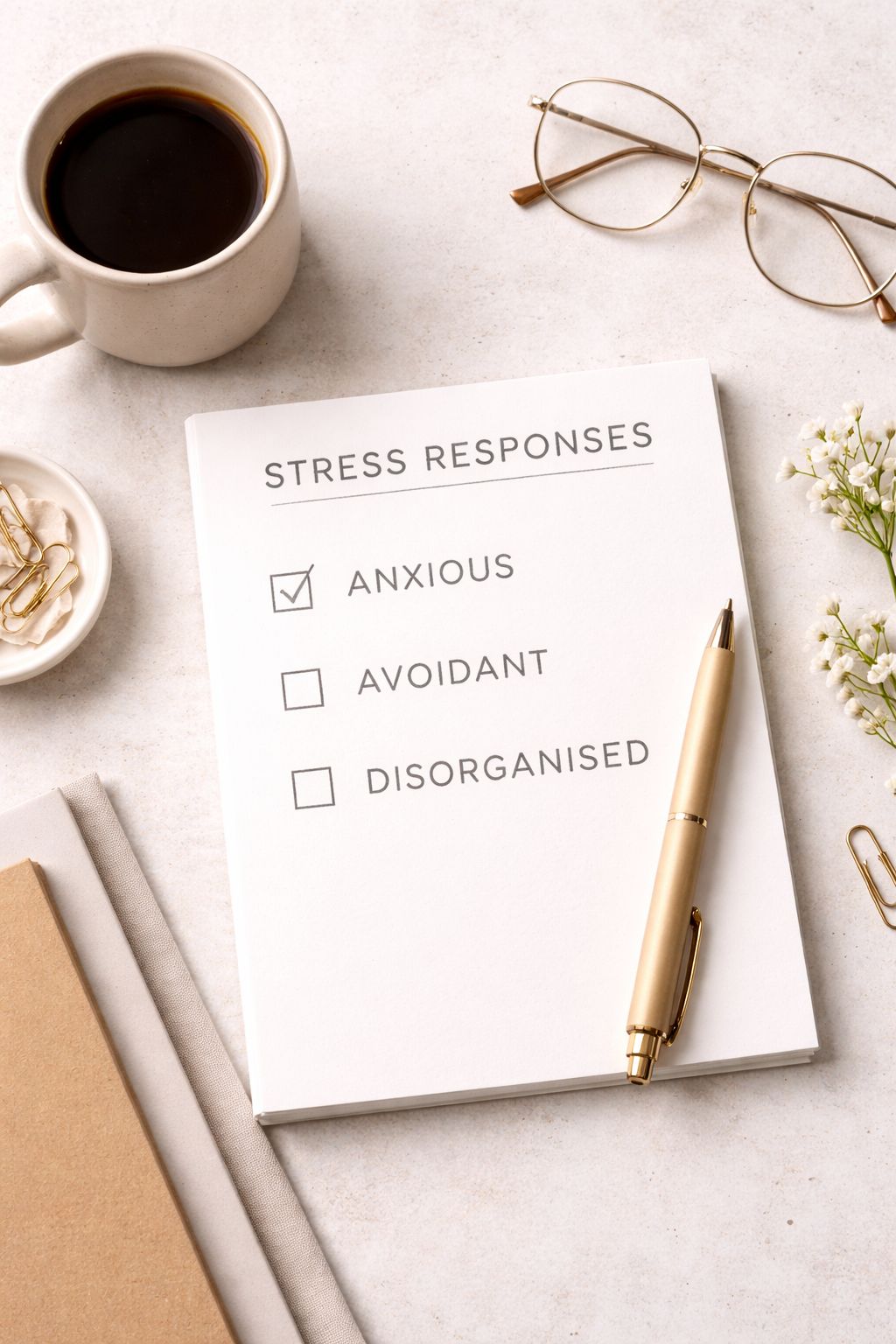
Why Behaviour Under Pressure Is Not About Attitude
In workplaces, we often interpret behaviour through the lens of motivation, professionalism, or commitment. Someone disengages, overreacts, avoids decisions, or becomes inconsistent, and we assume a lack of effort or suitability.
But many of these patterns are not character flaws.
They are stress responses.
Attachment styles do not stay at home when we come to work. Under pressure, deadlines, uncertainty, or relational strain, they shape how people communicate, cope, and lead.
Understanding this does not excuse poor behaviour.
It allows us to respond with clarity rather than misinterpretation.
Secure Attachment at Work
Securely attached individuals tend to:
- Communicate clearly and directly
- Tolerate feedback without becoming defensive
- Manage stress without withdrawing or escalating
- Ask for support when needed
They are not immune to pressure, but they recover more quickly because their nervous system returns to baseline without excessive effort.
Secure attachment does not mean calm all the time.
It means regulated enough to stay engaged.
Anxious Attachment at Work
This can look like:
- Overworking or people-pleasing
- Sensitivity to tone or perceived rejection
- Seeking reassurance from managers or colleagues
- Difficulty switching off or trusting that things are okay
This is not a lack of confidence.
It is a nervous system scanning for safety.
Under stress, anxious attachment drives behaviour aimed at maintaining connection, sometimes at the cost of boundaries or wellbeing.
Avoidant Attachment at Work
This can present as:
- Emotional distance or self-reliance to a fault
- Discomfort with feedback or collaboration
- Withdrawing when pressure or conflict arises
- Preferring task focus over relational engagement
Avoidant responses are not indifference.
They are protection.
When stress rises, autonomy feels safer than connection.
Disorganised Attachment at Work
This pattern can look like:
- Inconsistent engagement
- Strong reactions followed by withdrawal
- Difficulty trusting leadership or systems
- High performance paired with burnout or conflict cycles
This isn’t about motivation or commitment.
It’s about what happens when stress activates an unintegrated attachment response.
When safety feels uncertain, the nervous system oscillates between approach and avoidance, making behaviour appear unpredictable when it is actually protective.
This is often misunderstood as attitude or instability rather than nervous-system overload.
Why This Matters in Professional Settings
When attachment responses are misread:
- Performance issues are personalised
- Conflict escalates unnecessarily
- Good people disengage or burn out
- Leaders miss opportunities for regulation and repair
When they are understood:
- Feedback becomes clearer and less reactive
- Boundaries are held without escalation
- Teams stabilise rather than fragment
- Individuals are supported without being managed emotionally
This is not about diagnosing colleagues.
It is about recognising that behaviour under pressure is often about safety, not intent.
The Takeaway
Strong workplaces are not built by ignoring nervous systems.
They are built by leaders and teams who understand how stress shapes behaviour and respond with clarity, structure, and regulation.
This protects performance.
And it protects people.
 The Next Chapter Room
I’d love to hear your thoughts, feel free to share in the comments.